
For professionals planning a future in the United States, understanding the difference between an H-1B visa and a Green Card is one of the most important immigration decisions. While both allow foreign nationals to live in the U.S., they offer very different rights, timelines, and long-term opportunities.
An H-1B visa is generally a temporary employment-based visa that allows U.S. employers to hire foreign professionals in specialty occupations. A Green Card, by contrast, provides lawful permanent residency and a direct path toward long-term settlement and eventually citizenship.
For many skilled workers, especially Indian applicants, the choice between H-1B vs Green Card affects career flexibility, family planning, property ownership, business opportunities, and the path to becoming a permanent resident.
If you are comparing green card vs H-1B, this guide explains everything—from what H-1B means to how the H-1B to Green Card process works.
What Is H-1B Visa?
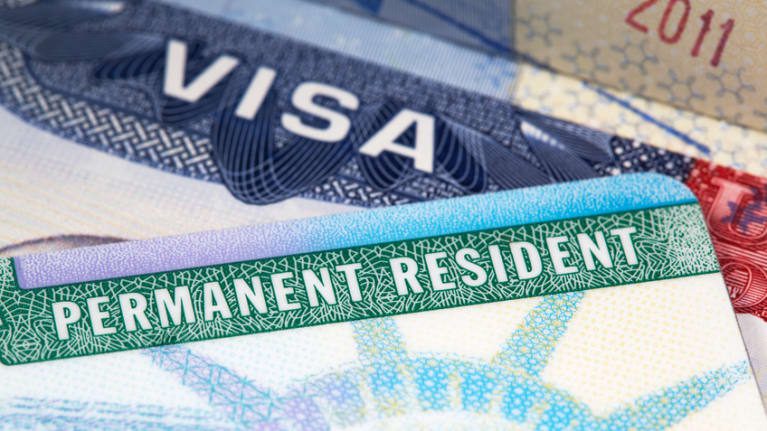
USCIS defines the H-1B as a temporary work visa for specialty occupations requiring specialized knowledge and usually at least a bachelor’s degree in a relevant field.
H-1B visa meaning
The H-1B visa means a U.S. employer can sponsor a foreign professional to work legally in the country for a temporary period. It is widely used in industries such as:
- IT
- Engineering
- Healthcare
- Finance
- Scientific research
- Education
When people search what is H1B visa, what is an H1B visa, or what is H1B visa in USA, they are usually asking whether it provides permanent residency.
The answer is no.
Is H-1B a Green Card?
No. H-1B is not a Green Card.
An H-1B is a nonimmigrant visa, while a Green Card grants lawful permanent resident status.
That means an H-1B visa holder remains dependent on immigration status approval and employer sponsorship, whereas a Green Card holder can generally live and work in the U.S. independently.
H-1B Visa vs Green Card: Main Differences
The comparison between H-1B and Green Card becomes clear when looking at residency rights.
Feature | H-1B Visa | Green Card |
Status | Temporary | Permanent |
Sponsorship | Employer required | Usually independent after approval |
Job change | Restricted | Flexible |
Residency | Limited | Indefinite |
Citizenship route | Indirect | Direct |
Family benefits | Conditional | Broader rights |
Travel flexibility | Limited by visa | Greater flexibility |
Difference between Green Card and H-1B visa
The core difference is sponsorship.
An H-1B visa is tied to the sponsoring employer. If employment ends, the visa holder may need to transfer status quickly.
A Green Card removes most employer dependency, giving individuals freedom to:
- Change employers
- Start businesses
- Freelance
- Study
- Retire
- Sponsor family members
Is H-1B an Immigrant Visa?
No. H-1B is categorized as a nonimmigrant visa.
However, it is considered a dual-intent visa, meaning holders may legally pursue permanent residency while on H-1B.
This is why many applicants move from H-1B to Green Card through employer sponsorship or investment pathways.
How Does H-1B Lottery Work?
Every year, U.S. employers submit registrations for the H-1B cap under the annual selection system managed by USCIS.
The standard cap typically includes:
- 65,000 regular cap slots
- 20,000 advanced degree exemptions
Because demand often exceeds available slots, a lottery is used.
This makes H-1B highly competitive, especially for applicants from India.
Is H-1B Tied to Employer?
Yes.
One of the biggest limitations of H-1B is employer dependency.
Because the visa is employer-sponsored, the worker’s legal stay is linked to employment status.
This affects:
- Promotions
- Salary negotiations
- Job switches
- Entrepreneurship
- Layoff security
Many workers stay in roles longer than planned to preserve visa continuity.
H-1B Visa Job Loss Timeframe
If an H-1B holder loses employment, there is generally a grace period (commonly cited as up to 60 days under current rules, depending on circumstances) to:
- Find a new sponsoring employer
- Change visa status
- Leave the U.S.
Because immigration rules can change, applicants should verify current guidance with USCIS or qualified counsel.
What Is a Green Card?
A Green Card gives foreign nationals lawful permanent residence in the U.S.
This means they can:
- Live permanently
- Work without sponsorship
- Buy property
- Access education pathways
- Start companies
- Build credit
- Pursue citizenship eligibility
The official term is Permanent Resident Card.
Benefits of Green Card vs H-1B
Green Card holders generally enjoy advantages that temporary visa holders may not.
Key benefits
- No employer dependence
- Freedom to change jobs
- Ability to work for multiple employers
- Self-employment
- Residency security
- Long-term education planning
- Family sponsorship
- Citizenship eligibility
For many professionals, Green Card status reduces immigration uncertainty.
H-1B to Green Card Process
Most people transition using employer sponsorship.
Common routes
1. PERM labor certification
Employer initiates labor process.
2. Form I-140
Immigrant petition.
3. Form I-485
Final residency adjustment.
How Long Does H-1B to Green Card Take?
Processing depends on:
- Country of birth
- Visa category
- Priority date
- Employer
- Backlogs
For some applicants:
- 2–5 years
- 7–10 years
- Longer in oversubscribed categories
Applicants from India often face longer wait times due to quota backlogs.
Can H-1B Lead to Citizenship?
Yes.
The path usually looks like this:
H-1B → Green Card → Citizenship
Standard pathway
- Work on H-1B
- Obtain Green Card
- Meet residence requirement
- Apply for naturalization
So when people ask h1b visa to citizenship, the route generally requires permanent residency first.
Alternative Route: Direct Green Card
Many professionals now explore the US EB-5 Green Card Program.
This route may suit applicants seeking permanent residency without relying solely on employer sponsorship.
Potential advantages can include:
- Direct immigrant category
- Family inclusion
- Concurrent filing in some cases
- Employment authorization during process
Explore related Immigration Programs if comparing routes.
H-1B vs Green Card: Which Is Better?
This depends on your goal.
H-1B may suit you if:
- You want to gain U.S. work experience
- You have employer sponsorship
- You plan short- to medium-term stay
- You are exploring future residency
Green Card may suit you if:
- You want permanent settlement
- You need career freedom
- You want family security
- You want citizenship eligibility
- You want business flexibility
H-1B to Green Card for Indian Applicants
Indian professionals make up a large share of H-1B users.
Common challenges include:
- Long visa queues
- EB category backlog
- Priority date delays
- Family dependency issues
- Career limitations
This is why many evaluate alternative residency programs earlier in the immigration journey.
Final Thoughts
Choosing between an H-1B visa and a Green Card is not simply a temporary versus permanent decision. It affects your entire future in the United States—from work rights to family planning to eventual citizenship.
If your goal is short-term employment, H-1B may work.
If your goal is permanent relocation, career independence, and settlement, a Green Card usually offers a stronger long-term pathway.
Before proceeding, review options under the US EB-5 Green Card and other Immigration Programs to compare the best route for your circumstances.
FAQs